
Redefining Relationships and Support Circles After Spouse or Partner Loss
Author: Erin Leigh Nelson & Colleen E. Montague, LMFT
After the loss of your spouse or partner, you may be trying to find your place in an entirely new social landscape. You are walking through a complex and emotional time where your relationships are both a lifeline and a source of unexpected challenges. Grief touches every connection you have, creating a new and often disorienting terrain.
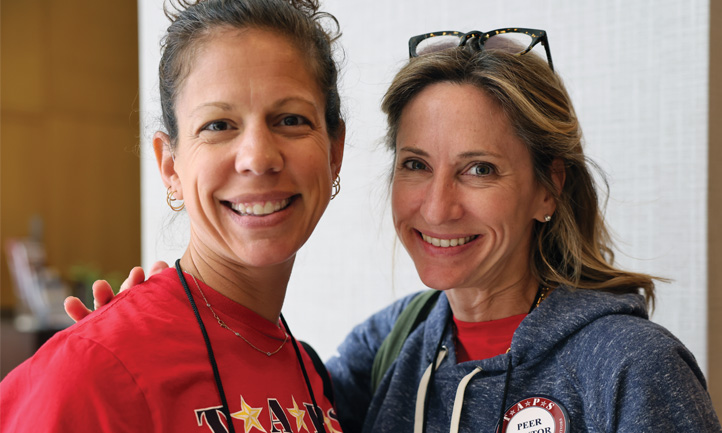
Relationships with friends and family that once felt natural may feel strained or awkward. As one recently widowed mom shared, “Friday nights were the nights my husband and I went out with other couples. Now, when those invitations come, I find myself feeling anxious about being there without him. Conversations don’t seem to flow like they once did.”
Grieving Together
When your spouse or partner dies, it impacts your relationship with friends and family. What were once natural connections may now require effort. Some find relationships strengthened because of the increased bond over your shared love for your partner, while others find them more difficult because of the uniqueness of each person’s response to grief.

In this tender time, misunderstandings may arise more easily as everyone processes their loss differently. It’s natural for each person to want their particular experience of loss to be seen and acknowledged. Others may be experiencing this loss as the death of their child, a sibling, or a dear friend, and may be tempted to compare their pain to another’s. Even when surrounded by those who care deeply for you, you might feel alone in your grief because of the uniqueness of each person’s loss and the bond they shared with your partner.
Finding Your “Alongsiders”
You might find yourself surprised by who shows up and who steps back when grief enters your life. A close friend may suddenly fall away, while someone you don’t know very well may step into your pain with exactly what you need. One dad who lost his wife shared, “My best friend had a hard time looking me in the eye, but my neighbor, who I hardly knew, came and checked on the kids and me almost every day.”
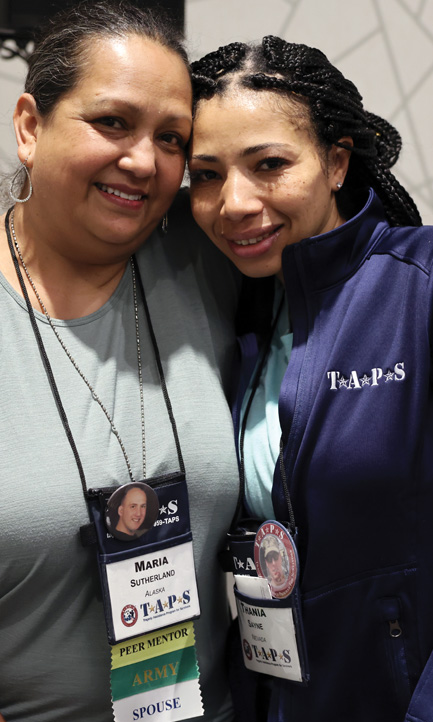
The reshaping of relationships is part of grief. Some people may retreat, not because your pain isn’t real, but because it brings up an unhealed part of them. Others may try to fix what can’t be fixed and offer hollow words like, “Everything happens for a reason,” or “They’re in a better place now.” When you hear “brightsiding” messages, stay true to your grief process by responding with authenticity. If someone says, “You are so strong and are handling this so well,” you can say, “Actually, I don’t feel strong at all, especially today, and I’m learning that’s part of grief.” If someone says, “Time heals all wounds,” you can respond, “I’m healing at my own pace as I learn to carry my love for him in a different way.” Your tender heart needs to be true to itself during this time, and it may be uncomfortable for others, but grief, by nature, is just awkward sometimes.
Even the gentlest form of our American greeting, “How are you?” can feel like an impossible question to answer. The pain of your grief deserves to be honored and expressed in the way it is felt in each moment, not hidden away behind polite smiles and words. When your honest expression of grief is welcomed and met with acceptance, it supports your healing. Before responding, take a moment to check in with yourself. Are you emotionally prepared to share in this moment? Do you have the energy for an honest conversation? Or do you need to keep it simple? Is this someone you are comfortable being honest with? One grieving parent discovered a strategy of asking the person what kind of answer they are seeking: “Do you want my quick answer, or the truth?” This simple question creates space for genuine connection. Consider developing some go-to responses that feel authentic to you: “I’m functioning, but sad,” “Thank you for asking. It’s hard, but we’re doing OK,” or “This moment is a tough one.” Because your grief represents your love for your partner, it needs to be witnessed in all its forms.
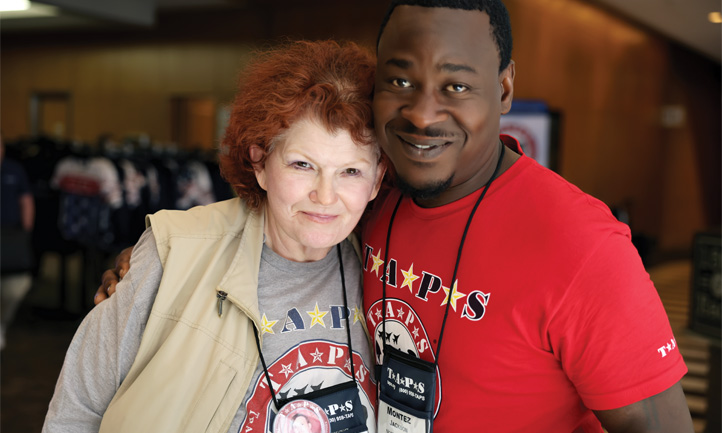
Finding someone who is an “alongsider” is essential to your healing. These are the ones who can sit with you in the dark without rushing to turn on a light. They understand that there is nothing they can do or say to take your pain away, but their presence helps it feel more bearable. They don’t try to fix your pain; they are there to hold it with you.
Create your circle of support with those who give you the most strength. As you consider your alongsiders, ask yourself:
- Who can listen to and bear your darkest thoughts and deepest fears?
- Who knows how to jump in with practical help, like dishes and laundry?
- Who can speak your loved one’s name and share in your love for them?
- Who can sit with you in silence, offering comfort with their presence?
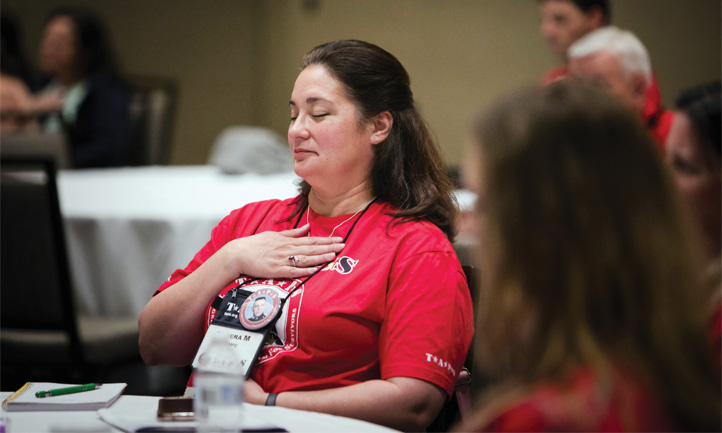
You might even find yourself using “brightsiding” messages in harsh internal dialogue like, “I should be stronger,” or “I need to manage this better.” These thoughts can feel like an additional burden to your heavy heart. Try practicing self-compassion when those critical thoughts arise with a gentle healing technique. Place your hand over your heart and say to yourself, “It’s understandable that I feel this way.” As you exhale, imagine pushing away unsupportive messages from yourself or others. You need care and kindness right now, even from yourself. Whether you are more introverted or extroverted, you will need a balance of alone time and supportive companionship. In some moments, you may crave solitude to journal, reflect, or accomplish tasks. Other times, you’ll need the warmth of understanding your alongsiders. You are learning to respond to the energy of your grief to identify what you need moment by moment.
Layering Support
Your grief needs will change with time, and so might your needs for support. Some friends or family members are good for the early days, and some will be your steady, long-term supporters. Over time, you may want to reach out to others who share a similar loss. Support groups and online communities can offer a space where you feel understood without explanation. Counselors can also offer a space where you learn to express the grief in your body and find long-term coping strategies to help you heal.
Take a deep breath. Let it out. Place your hand over your heart and notice your heartbeat. Your heart, though changed forever because of your loss, continues its rhythm forward as you carry your love alongside your pain. And remember, any heavy work becomes lighter when you hold it with others. Having a community, no matter how small, to hold your grief with you helps you move toward healing.
Photos: TAPS Archives