Rucking Through Grief
Author: Gregory T. Jacobs, Surviving Father of Army SPC David M. Jacobs
Hoisting my REI pack onto my back, I feel every bit of the 42 pounds inside. The seams hold together, resilient against the strain. I once again say hello to David as I start my three-mile ruck at the cemetery where he is buried. He doesn’t audibly return the gesture, but I know he is there with me. It is almost as if he winks at me each time, acknowledging, “Dad, I see you have my backpack on again, and I am glad you are getting use out of it.”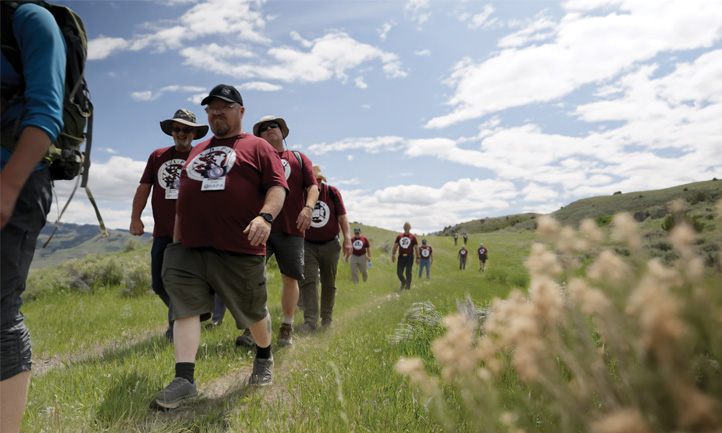
I first heard about “rucking” — the action of walking with weight on your back — through Mike Rowe’s podcast, and it inspired me. I bought some weights on Amazon and dug David’s green REI backpack out of a Rubbermaid tub in the basement. I find great peace and tranquility in systematically doing functions that honor my son. Some are public, but I would venture to say that most are private.
David was in the Army and was killed in an auto accident in December 2020. I started rucking in November of 2024. I don’t do it every day, but most days, I feel the urge to sling his pack over my shoulder and do what most don’t. The Navy SEALs have a motto that “the only easy day was yesterday.” I try not to stay content with what I have already done, but strive to push myself to tackle something new and challenging.
Motivation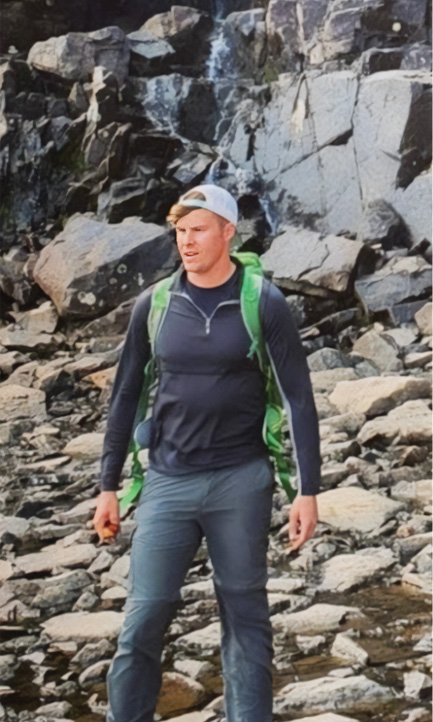
Like most things in life, we need to find what motivates us to accomplish certain tasks. For example, I have no desire to climb Mt. Everest, nor do I think I have the fortitude or physical stamina at this stage. However, through baby steps, I have found that I can work on accomplishing feats — like rucking — that six months ago I never thought possible. My motivation for rucking is to honor David. I don’t call attention to myself, but rather quietly drive to the cemetery, throw his old backpack over my shoulders, and move. I find that moving forward is the secret of life. Once we slow down and eventually stop, we stop growing and overcoming life's obstacles.
Challenge
Life is fraught with challenges. We don’t always choose to confront and push through them; sometimes we put on the brakes or go around them. My challenge in rucking was working my way up to 42 pounds; it didn’t happen overnight. My challenge is continuing to ruck with that weight while increasing time and distance, but challenges — especially in grief — aren’t always physical.
Recently, I was communicating with a grieving dad in a group setting, and I stopped to ask if he would like to share about his deceased son. He looked at me with flooding tears in his eyes and quivering lips, unable to muster the words. I assured him that it was OK and that I wasn’t uncomfortable with emotion or silence, but sometimes we must be patient so others can share.
Patience and listening with a supportive hand on his shoulder might be what this surviving dad needed in that moment — emphasizing the need for communicating rather than just talking. I equate it to the sound barrier Chuck Yeager punched through in “Glamorous Glennis” on Oct. 14, 1947. You must punch through the challenges in life, or they will hold you back. Eventually, after a few minutes of choking back the emotion and tears, this dad looked at me and said, “What next?”
Suppose I glossed over what was perceived as the inability to communicate about his deceased son. In that case, he might not have been able to punch through that grief barrier — overcome his challenge — and express his fears, anxiety, and uncertainty about the future.
Do Something for You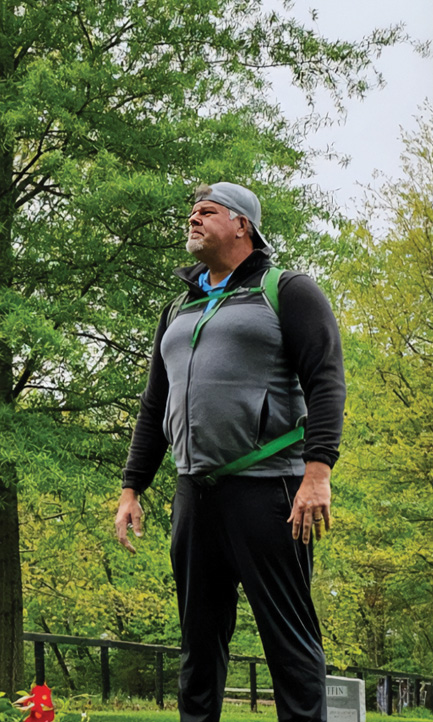
A Rotary Club member for years, I lived my life by the motto: “Service Above Self.” However, there is a difference between selfishness and self-care. The Merriam-Webster dictionary defines selfishness as “a concern for one’s own welfare or advantage at the expense or disregard of others: excessive interest in oneself.” In contrast, self-care is simply “care for oneself” — it’s essential to moving forward on our grief journey. Life is always going to call on us to do things for others, but we must take care of ourselves before we can support someone else.
It is easy to read this article and think it is about rucking. It is not. Rucking is the method by which I cope with my grief journey. The underlying facet is that it is hard. Most days, I don’t want to do it. Sometimes, I struggle with the heavy burden. Nobody understands what I am shouldering; they think I’m OK — this applies to rucking and grief.
Recently, a retired Army lieutenant colonel asked to visit David’s grave with me. He was shocked at how I could walk over to David’s grave and communicate with him like he was standing there. Rucking at the cemetery gives me a chance to walk most days in a beautifully manicured, serene location with very little traffic, but it also allows me to overcome any ominous feeling I might have about going to the cemetery. It lets me put in the work daily while bringing normalcy to my grief journey.
Just as I found inspiration, motivation, challenge, and self-care in rucking, I hope you can find your meaningful way to challenge yourself to do something you never thought possible while honoring your loved one. Along the way, know that you are loved and you are not alone.
Photos: Gregory T. Jacobs