Positive Attributes We Can Model for Our Children
Author: Andy McNiel, M.A., Senior Advisor, TAPS Youth Programs
It has been said that children are keen observers but poor interpreters — meaning, they have a hard time distinguishing between behaviors they should mimic and those they should avoid. All adults in a child’s life are models for how to behave, and children who have adults modeling positive attributes in their own lives are more likely to adopt these behaviors themselves as they grow into adulthood. Let’s explore four positive attributes we can model that promote healthy growth and development in our children.
Facing Adversity With Resolve
Life will have adversity. No one knows this better than those of us who have experienced the painful reality of loss and grief. Children grieving the death of a family member or friend learn very early in life that there are different degrees of adversity, some more intense and life-altering than others. This is why it is important that we model how to face these challenges in life with a sense of resolve. This does not mean that we are perfect or hide our grief from our children. Facing adversity with resolve simply means that we keep going with determination even though our pathway is challenging to traverse. We can show our children that feelings are OK and expressing those feelings can be healthy. We can demonstrate how struggle and grief are to be expected when we experience loss, while at the same time modeling healthy approaches to facing hard times.
Adapting to Change With Hope
In the same way we model facing adversity with resolve, we can model how we adapt to all the changes loss brings to our lives with some amount of hope. Hope is not just a feeling or a fleeting thought. Hope is a mindset and lifestyle that we can build and nurture. For example, facing adversity with resolve, as mentioned above, can produce a sense of hope in our lives. Another component of hope is the ability to trust yourself and the ability to trust others. We often focus attention on our failures and the failures of others, overlooking our strengths and the positive actions of others in our lives. Directing our attention to the good around and within us reminds us that we are capable and that others can be reliable.
Creating predictability and rituals; leaning into our ability to make choices for ourselves that friends and family validate; and believing that good things can happen in our lives, even amid the pain of loss, are all components of hope.
Succeeding With Grace and Failing With Dignity
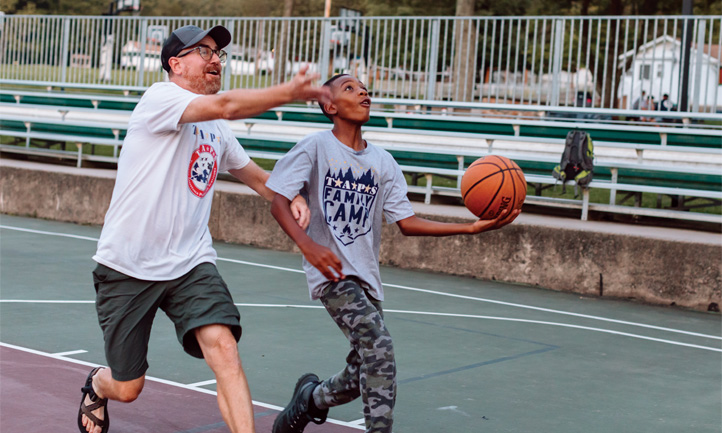
Winning and losing are parts of life we experience very early. Playing games, participating in sports, or competing in or outside of school are often a child’s first experiences of success and failure. Succeeding with grace means learning how to be humble, yet confident in our success. Failing with dignity is recognizing that our self-worth is not fully dependent on perfection and that we have room for personal growth. This balance can be hard to strike, particularly for children who have already suffered a major loss. We can model for our children what it looks like to face life’s many challenges with a positive attitude. We can remind our children that we cannot always control our circumstances, but we can control our attitude in the midst of those circumstances.
Accepting Responsibility for Your Choices
People who accept responsibility for their choices are often more self-reliant, better able to adapt to changing circumstances, and more in control of their response to life’s difficulties. Our children look to us and the other adults in their lives to learn how to accept responsibility for their personal choices. When we, as adults, admit when we behaved or reacted inappropriately; point out how personal choices impact a particular situation; or accept responsibility for our own actions and reactions, we’re modeling accepting responsibility for our choices.
Though we are not fully in control of our children’s behavior, we do have a responsibility to be their “teachers” through modeling positive, healthy behaviors. Consider what attributes you would like to encourage in your children’s lives — taking from this list and those not mentioned that may be priorities for you and your family — and begin implementing these in your own life.
Photos: TAPS Archives